One execution arrives twice
Recover unique filled quantity before retrying a lost-response order.
Illustrative simulation · No historical performance claim01. Read the information available.
A six-ounce intention was submitted and its response was lost. The recovered execution ledger contains F1: two ounces at 2,000; F2: one ounce at 2,001; and a repeat delivery of the same F2 execution identifier. Current candles do not reveal order acceptance or fill identity. The stated ledger is the execution evidence for this exercise.
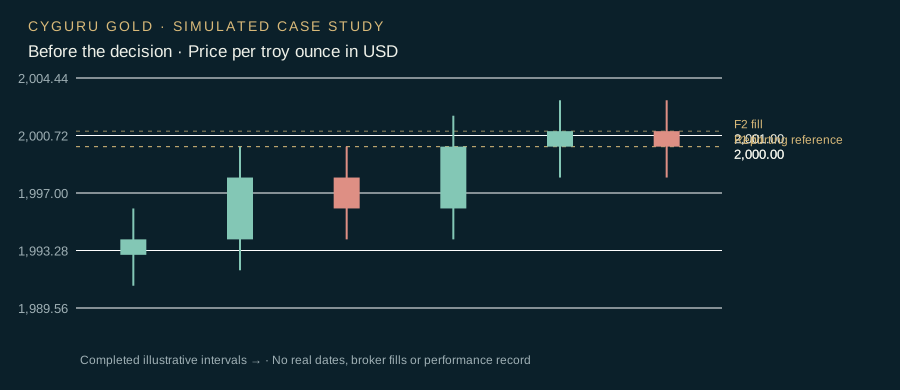
02. Apply the documented plan.
Enter reconciliation required and block new exposure while external state is uncertain. Count each unique fill once. Confirm the status of the unfilled remainder before releasing its reservation. A cancellation request is not proof of cancellation; a fresh six-ounce retry is not a harmless display refresh.
Three ounces executed; USD 10 net loss in the stipulated ledger
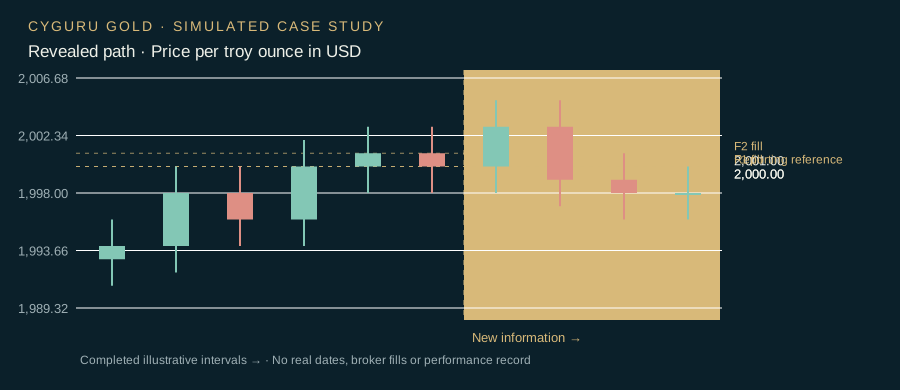
The remaining three-ounce entry is subsequently confirmed canceled. All three executed ounces later close at 1,998. Entry value is 2×2,000+2,001=USD 6,001; exit value is 3×1,998=USD 5,994. Gross is −USD 7 and USD 3 total explicit fees produce −USD 10 net. The weighted entry is 2,000.3333. The chart cannot prove these fills; the case explicitly supplies them as additional execution records.
Reproduce the calculation
| Component | Calculation or state |
|---|---|
| Unique fills | 2+1 = 3 ounces |
| Weighted entry | 6001/3 = 2000.3333 |
| Gross | 5994−6001 = −USD 7 |
| Net after USD 3 fees | −USD 10 |
Use the case facts and their units. Chart movement alone does not prove execution or account cash flows.
What this case teaches
Retain the duplicate in the operational incident history while excluding it from economic quantity. Requested, unique executed, working and canceled quantities need distinct fields.
Your reviewed scenarios are saved in this browser.